We can associate activities with entity records even though they are closed (in inactive state) because CRM setup 1:N relationship with activity and other activities related entities if Activities checkbox is selected under entity definition. But let’s say we have business requirement to stop this behavior. There is no out of the box setting to disable it, but we can… Read more »
In our last Web API article we discussed about Web API functions, if you have not checked it yet, click here to know about web api functions. Today we are going to discuss about Web API actions. Similarly to function actions are also reusable piece of code and can bound or unbound. There are list of pre define actions, which… Read more »
Did you get a request to setup CRM demo with email integration enabled and looking for steps to setup the same?? if yes this article is going to help you for sure. This is a common ask when you are working in pre sales. This article will provide basic steps required to set CRM online demo and using email integration…. Read more »
You may get this error while accessing your IFD deployment if you recently changed your ADFS service account password. To resolve this issue, you can follow below steps: Start Internet Information Services Manager and select applications pools. Select ADFS app service pool and click on Advanced Settings under Actions from right hand navigation. Click on Identity ellipse (…) under Generate Process… Read more »
In our last article we discussed about standard functions, today we are going to discuss Query Function. These functions are basically conditional operators, so there is conditional operator corresponding to every query function. we can get complete list of query function reference from here. We can use these functions similar to standard function, but we just need to make sure… Read more »
If you are developer, you should be familiar with functions. It is a reusable piece of code which can be used to perform different operation based on their definition. CRM 2016 introduced Web API function which can be used to perform different CRM operations. Following are the two functions available in Web API: • Function • Query Function In this… Read more »
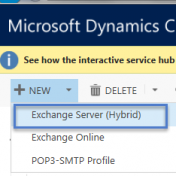
In this article we are going to provide steps to setup support queue and email integration in Dynamics CRM 2016. Let say we want to set a support queue in CRM online where we can get support request from our customer. We are going to use hybrid email integration here using CRM online and on premise exchange. So let see… Read more »
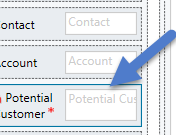
In this post we are going to discuss about removing potential customer lookup field from opportunity form. Starting from CRM 2013, potential customer field was removed from opportunity form and individual account and contact lookup were added to opportunity form to set opportunity customer, but if we added by mistake potential customer field added to opportunity form, then we can’t… Read more »
In our earlier post we discussed how we can fetch data using retrieve and retrievemultiple request. We demonstrated how we can include different fields from primary entity. In this post we are going to discuss how we can fetch additional information (formatted values) and related entity properties. In our retrieve example we included single valued navigation property using _navigationpropertyname_value which returns… Read more »
Associate and disassociate request is used to link and unlink records having relationship. We can link and unlink records depending on their relationship type for example, We can link records having 1:N using update request (setting lookup). In our earlier sample we demonstrated how we can update lookup field using Web API. In this post we are going to discuss… Read more »